
How to Know When Your Drywall Needs Repair: A Guide for Estero, FL Homeowners
There is something easy to forget about drywall: it is supposed to disappear.
When it’s doing its job, you don’t think about it. Your walls are smooth, your ceilings look even, and the paint gives everything a clean finish. It’s only when something changes—a dent, crack, stain, or hole—that you suddenly start noticing the wall itself.
For homeowners in Estero, Florida, those changes can happen for all sorts of reasons. Moving furniture can leave a dent. A picture frame can come loose. A door may swing open too far and damage the wall behind it. Florida’s humidity and heavy rain can also contribute to moisture-related problems that show up as stains, bubbling paint, or damaged drywall.
The good news is that many drywall problems are straightforward to repair when they are caught early.
The harder part is knowing whether you’re looking at a simple cosmetic repair or a sign of something that needs more attention.
Not Every Crack Means the Same Thing
A small crack in a wall can be unsettling, especially if you aren’t sure what caused it. However, cracks can develop for many different reasons, and their appearance can provide useful clues.
Fine cracks around joints or seams may develop as a home settles or as materials expand and contract. Small nail pops can also appear when fasteners move slightly beneath the surface.
These types of imperfections are often relatively minor.
On the other hand, a crack that keeps getting larger, appears suddenly, or is accompanied by other changes deserves a closer look. If you notice several new cracks at once, doors or windows that suddenly stick, or other signs that something has shifted, it may be worth having the underlying issue evaluated rather than simply filling the crack.
The repair itself may be easy. The important question is why the damage appeared in the first place.
Dents and Small Holes Are Usually Easier Than They Look
Some of the most common drywall damage is also the least mysterious.
A doorknob can leave a circular indentation. Moving a couch can scrape a wall. Removing an old wall-mounted television can leave several holes behind. Even something as simple as taking down shelves or artwork can leave a collection of anchors and screw holes that become very noticeable once the room is repainted.
These repairs are usually cosmetic, but that doesn’t mean they aren’t worth doing.
Small imperfections tend to stand out once you notice them. A wall can be freshly painted and otherwise look beautiful, yet a handful of old holes can make the room feel unfinished.
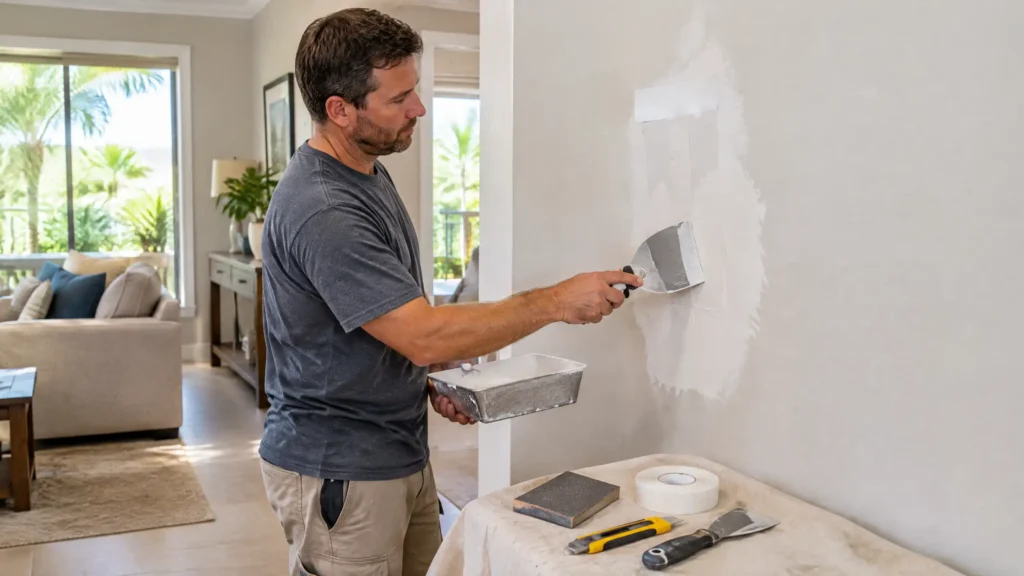
The basic repair involves filling the damaged area, allowing the material to dry, smoothing the surface, and blending the repair with the surrounding wall. Larger holes may require a patch rather than simple filler.
The tricky part is often the finish.
A repair that is structurally sound can still be obvious if the surface isn’t properly blended or the texture doesn’t match the surrounding wall. That’s one reason homeowners sometimes decide that a small repair isn’t worth attempting themselves.
Water Stains Deserve More Attention
A small dent is one thing. A brown or yellow stain on your ceiling is another.
Water stains can have several possible causes, including roof leaks, plumbing problems, condensation, or water entering around windows and other exterior openings.
This is where drywall repair and moisture problems overlap.
The EPA recommends finding and fixing water leaks because persistent moisture can contribute to biological growth and damage building materials. Its guidance also recommends inspecting areas such as windows, doors, and other parts of the building envelope for moisture-related problems.
That means painting over a water stain isn’t necessarily a complete repair.
If the source of the moisture is still active, the stain can return. Worse, the drywall may continue to deteriorate behind the finished surface.
Before repairing a stained ceiling or wall, it’s important to understand where the water came from and make sure the source has been addressed.
What About Bubbling or Peeling Paint?
Paint that starts bubbling, blistering, or peeling can make a wall look much worse very quickly.
Sometimes the cause is simply an old or poorly prepared painted surface. In other cases, moisture may be involved.
Pay attention to where the problem is located.
If peeling paint is concentrated around a bathroom, window, exterior door, ceiling, or plumbing fixture, moisture should be considered as a possible cause. A room with poor ventilation can also experience excess moisture.
This doesn’t mean every peeling patch is evidence of a leak. It simply means that repainting should not always be the first step.
Take a moment to investigate before covering the problem.
Drywall Around Windows Can Tell You a Lot
Windows are an important part of your home’s exterior barrier. They also happen to be areas where small maintenance problems can develop over time.
Damaged caulk, failed seals, or gaps around window trim can allow water or outside air to enter where it shouldn’t. ENERGY STAR identifies visible gaps around window and door trim, peeling paint, and drafts as signs that an area may benefit from additional air sealing.
In a Florida home, keeping an eye on these areas makes practical sense.
If you notice discoloration beneath a window, swollen trim, soft drywall, or paint that repeatedly peels in the same location, don’t treat the surface alone. There may be an underlying issue around the window that needs attention first.
A little maintenance around the opening can sometimes prevent a much larger interior repair.
Bathroom Walls Take a Beating
Bathrooms are naturally tough environments for drywall.
Warm showers add moisture to the air, while water can reach walls around tubs, showers, sinks, and toilets. Over time, failing caulk, plumbing leaks, or poor ventilation can contribute to damage.
Look closely at the areas that receive the most exposure.
If drywall near a shower begins to soften, swell, discolor, or develop a musty smell, it’s worth investigating rather than simply repainting it.
The EPA recommends using exhaust fans in bathrooms and kitchens to remove moisture to the outside.
Good ventilation won’t fix an existing leak, but it can help reduce unnecessary moisture inside the room.
When Should You Repair Drywall Instead of Replacing It?
This is one of the most common questions homeowners have.
The answer depends on the size and condition of the damaged area.
A small nail hole, dent, or limited surface crack can often be repaired without replacing a section of drywall. Larger holes, severely damaged areas, or drywall that has become soft from prolonged moisture may require removal and replacement.
There is also the question of what happened to the material.
If drywall has been repeatedly exposed to water, repairing the visible surface may not be enough. The damaged section may need to be removed once the moisture source has been resolved.
In other words, the goal isn’t simply to make the wall look good again.
The goal is to restore the wall properly.
A Good Repair Should Look Like It Was Never There
That’s really the test homeowners care about.
You don’t want a repair that draws your attention every time you walk past it. You want the wall to look normal again.
That requires more than filling a hole.
The repaired area needs to be smooth, properly prepared, and finished so that it blends with the surrounding surface. If the wall has a texture, that texture may need to be matched as well. Paint color and sheen can also affect how noticeable the repair becomes.
This is why a seemingly tiny drywall repair can sometimes take more patience than expected.
The actual hole may take minutes to fill. Getting the finished surface to disappear into the rest of the wall takes more care.
Small Repairs Can Make a Surprisingly Big Difference
There is a reason homeowners often put off small drywall repairs.
A dent doesn’t stop the refrigerator from working. A nail hole doesn’t prevent you from using the guest room. A small crack may not seem urgent.
So the repair gets added to the mental list of things to do “sometime.”
Eventually, that list gets long.
Taking care of several small repairs at once can make a room feel noticeably fresher without requiring a major renovation. Patch the old holes, repair the damaged trim, touch up the walls, and suddenly the space feels cared for again.
For homeowners preparing a property for sale, renting it out, welcoming guests, or simply wanting their home to look its best, these smaller projects can be well worth the effort.
And in a place like Estero, where homeowners spend plenty of time enjoying both indoor and outdoor living spaces, keeping the interior in good condition is part of maintaining the home as a whole.
When a Ceiling Repair Needs More Than Spackle
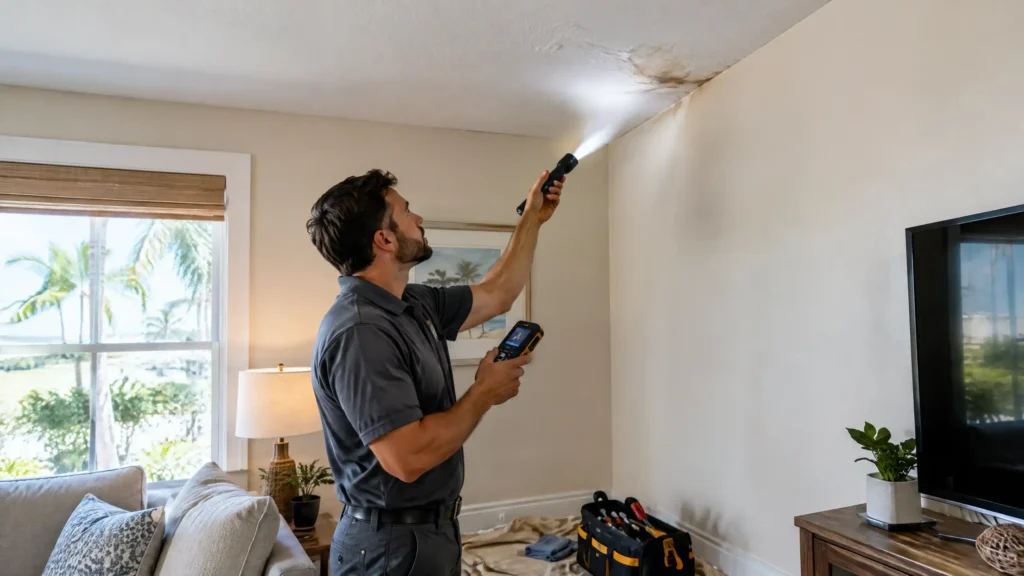
Ceiling drywall deserves a little extra attention because damage there can sometimes point to a problem above it. A brown or yellow stain, bubbling paint, a sagging area, or a crack that keeps returning may be connected to a roof leak, plumbing issue, air-conditioning problem, or another source of moisture.
If the drywall is simply showing an old stain and the source of the problem has already been corrected, the repair may be fairly straightforward. The damaged area can be prepared, patched if necessary, sanded, primed, and painted.
It is a different situation when the ceiling feels soft, has started to swell, or continues to show new signs of moisture. In that case, covering the damage with fresh paint only hides the symptom. The source needs to be identified first.
This is particularly important in Florida homes, where air conditioning systems, plumbing, heavy rain, and high humidity can all play a role in moisture problems. EPA guidance recommends fixing the source of water problems and drying affected materials promptly rather than simply covering visible damage.
Check Around Doors and High-Traffic Areas
Some drywall damage is much less mysterious.
Hallways, bedrooms, garages, laundry areas, and rooms with frequently used doors tend to collect small dents and marks over time. A door handle can leave a circular indentation. Moving furniture can scrape a wall. Children, pets, vacuum cleaners, and everyday activity can all leave their mark.
These repairs are usually cosmetic, but that does not mean they are not worth doing. A collection of small dents can make a room look tired even when everything else is in good shape.
The good news is that small drywall repairs can often be completed without replacing a large section of wall. The damaged area is filled, allowed to dry, sanded smooth, and prepared for paint. If the wall has a texture, the texture may also need to be recreated so the repair blends into the surrounding surface.
The final paint job matters just as much as the patch itself. A perfectly smooth repair can still stand out if the paint sheen or color does not match the rest of the wall.
Be Careful Around Electrical Outlets
If drywall is damaged around an electrical outlet, switch, light fixture, or other electrical component, take a little more care than you would with an ordinary wall dent.
A small crack in the drywall itself may be harmless, but damage can sometimes expose wiring or indicate that something has shifted behind the wall. Loose outlets, damaged covers, scorch marks, unusual odors, or signs of moisture around electrical components deserve attention before the wall is patched.
Drywall repair should not be used as a way to cover an electrical problem.
If you are unsure what caused the damage, it makes sense to have the underlying issue checked before finishing the wall. A good repair addresses the reason for the damage as well as the visible surface.
What Happens Before a Professional Drywall Repair?
A professional drywall repair should start with looking at the damage rather than immediately reaching for a bucket of joint compound.
First, the damaged area is assessed. Is it a simple hole? A crack? A water stain? Is the drywall soft or swollen? Does the surrounding area show signs of moisture? Has the same problem appeared before?
Those questions help determine the appropriate repair.
For a small cosmetic problem, the process may be relatively simple. Larger damage can involve cutting out the affected section, installing new drywall, securing the replacement properly, finishing the seams, sanding the surface, matching the existing texture, priming, and painting.
Water-damaged drywall requires additional care. EPA guidance notes that drywall may sometimes be dried in place when there is no obvious swelling and the seams remain intact. If the material has swollen or the seams are no longer intact, removal and replacement may be necessary.
That is one reason it is useful to distinguish between ordinary drywall damage and damage caused by water. They may look similar at first, but the correct repair can be very different.
Should You Repair Drywall Yourself?
For a small nail hole or minor dent, many homeowners are comfortable doing the repair themselves. There is nothing particularly complicated about filling a small hole, sanding it, and touching up the paint.
Larger repairs are less forgiving.
The challenge is often not filling the hole. It is making the finished repair disappear. Uneven sanding, visible seams, mismatched texture, or a slightly different paint color can make a repair more noticeable than the original damage.
There is also the question of what caused the problem.
If drywall damage is connected to a leak, recurring condensation, plumbing issue, or another moisture source, repairing the surface without addressing the underlying problem can lead to the same damage coming back.
For homeowners who would rather not spend an afternoon learning the finer points of drywall finishing, a handyman can take care of the repair and help identify whether the damage appears to be part of a larger maintenance issue.
Preparing the Wall for Paint
A drywall repair is not really finished when the hole is filled.
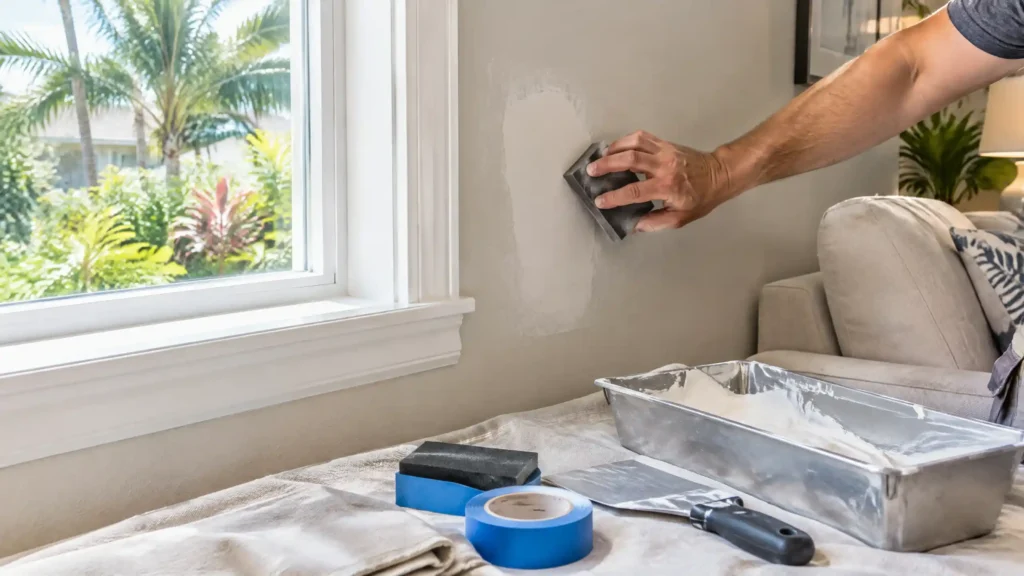
The repaired area needs to be smooth and properly prepared before paint is applied. Depending on the size and type of repair, that may involve multiple applications of joint compound, careful sanding, primer, and paint.
Primer is particularly useful when a repair has exposed new drywall or joint compound. It helps create a more consistent surface before the finish coat is applied.
Paint matching can also be surprisingly tricky. Even if you know the original paint color, the existing wall may have faded or changed slightly over time. Different levels of sheen can also make a repair visible even when the color appears close.
That is why good drywall work is often less about making the repair look good on its own and more about making it blend naturally into everything around it.
What If the Drywall Damage Keeps Coming Back?
Recurring damage is a sign that it is time to look beyond the drywall.
If the same crack reappears after being repaired, there may be movement, settling, or another issue affecting the area. If paint repeatedly bubbles or peels, moisture may still be getting into the wall. If a ceiling stain returns after painting, the original source may not have been fully corrected.
The same principle applies to musty odors and recurring dampness. EPA guidance emphasizes that moisture control is the key to preventing recurring mold problems. Leaks should be corrected, damp materials should be dried, and areas that remain wet or humid should be investigated.
A fresh coat of paint can make a wall look better for a while, but it cannot solve a problem that is happening behind the wall.
Small Repairs Can Refresh an Entire Room
Not every home improvement project needs to involve a major renovation.
Sometimes a room simply needs a little attention. A few nail holes, an old door-knob dent, damaged drywall around a window, a patched section on the ceiling, and a scuffed wall can add up to a room that feels more worn than it really is.
Taking care of several small repairs at once can make a noticeable difference.
This can be especially useful before putting a home on the market, preparing a rental property for a new occupant, getting a guest room ready, or simply keeping up with normal home maintenance.
Instead of waiting until every small problem becomes a major project, homeowners can deal with minor damage while it is still relatively straightforward.
When Should You Call a Handyman for Drywall Repair?
There is no single size of drywall problem that automatically requires professional help. The better question is whether you are comfortable identifying the cause, completing the repair, and getting the finished surface to blend with the surrounding wall.
Professional help can make sense when the damaged area is large, the ceiling is involved, the damage keeps returning, water is suspected, or the repair needs to match an existing texture or finish.
It is also worth getting help when several different repairs have built up around the house. Instead of dealing with one wall at a time, a handyman can assess the list of smaller projects and help determine which ones can be handled together.
For Estero homeowners, that can turn a collection of annoying little repairs into one manageable maintenance project.
Frequently Asked Questions About Drywall Repair
How do I know if drywall damage is serious?
Small holes, dents, and minor cosmetic cracks are often straightforward repairs. Damage accompanied by swelling, soft spots, recurring stains, peeling paint, musty odors, or visible moisture deserves closer attention because it may indicate a larger problem.
Can water-damaged drywall be repaired?
Sometimes. EPA guidance indicates that drywall may be dried in place when there is no obvious swelling and the seams remain intact. Swollen drywall or compromised seams may need to be removed and replaced. The type and extent of water damage should be considered before deciding how to proceed.
How do I know if a crack is only cosmetic?
A small, stable crack may be cosmetic, but a crack that keeps returning, grows, becomes wider, or appears alongside other damage deserves further investigation. When in doubt, have the area inspected before simply filling and painting it.
Can a handyman repair drywall and paint it?
Many drywall repairs can be followed by priming and painting so the finished area blends with the surrounding wall. The exact work depends on the size of the repair, the existing wall texture, and the condition of the surrounding paint.
Should I paint over a water stain?
Not until the source of the moisture has been addressed. Painting over an active moisture problem can hide the visible symptom without fixing the cause. EPA recommends fixing water problems and drying affected areas before painting.
How can I prevent drywall damage from moisture?
Start by dealing with leaks quickly and keeping indoor moisture under control. Bathroom and kitchen exhaust fans should vent outdoors, and areas around windows, doors, plumbing, and air-conditioning equipment should be monitored for signs of moisture.
Keep Small Wall Problems From Becoming Bigger Projects
Drywall damage is easy to overlook because it is usually part of the background of a room. A small dent may not seem important. Neither does a little peeling paint or a faint stain on the ceiling.
But walls can provide useful clues about what is happening inside a home.
A small cosmetic repair may be all that is needed. In other cases, the damaged drywall may be pointing toward a leak, moisture problem, or another issue that deserves attention.
For Estero homeowners, the goal is not to panic every time a crack appears. It is simply to pay attention to changes, understand what the damage may be telling you, and deal with problems before they have a chance to grow.
When the repair is straightforward, taking care of it can make a room look noticeably better. And when the damage points to something deeper, finding that out early can save considerably more work later.
ABC 123 Maintenance South provides property maintenance and home repair services for homeowners, property owners, and real estate professionals in Estero and surrounding Southwest Florida communities. When drywall repairs are part of a larger maintenance list, addressing several small issues together can be a practical way to keep a property in good condition.
Reliable Sources
- EPA — A Brief Guide to Mold, Moisture and Your Home
- EPA — What are the main ways to control moisture in your home?
- EPA — Mold Course: Water Damage and Cleanup
- ENERGY STAR — Sealing Behind Window & Door Trim

